When humans choose to venture out farther into space, they may consider bringing the tiniest of creatures along for the ride.
A recent experiment found that microbes’ ability to extract precious metals from asteroids remains unchanged by the microgravity environment, further proving that the microorganisms would make ideal passengers for future space missions. The findings, published in npj Microgravity, support the use of a cost-effective, low-energy alternative to launching tools and heavy machinery to space to tap into the natural resources found in the cosmos.
Microbial biomining
Humanity’s plans to explore the solar system largely depend on our ability to extract natural resources from space to resupply missions. Rather than relying on traditional methods for mining materials, scientists have been developing microbes to extract valuable elements from asteroids and other space rocks.
The process, known as biomining or bioleaching, relies on the ability of microorganisms to oxidize metals from mineral ores. The microbes used in the mining process, typically bacteria or fungi, release organic acids to dissolve rocks and extract elements such as iron, zinc, or copper.
The BioAsteroid project, developed by researchers from the University of Edinburgh, launched to the International Space Station (ISS) on December 6, 2020. The experiment is designed to investigate how gravity affects the interaction between microbes and rock.
Using two biomining reactors, researchers set out to observe how the microbes develop a biofilm on the surface of meteorite samples in low-gravity conditions. The samples were returned to Earth in 2021, and researchers began analyzing how the microorganisms fared in space.
Tiny helpers
The team of researchers behind the recent study found that microgravity increased microbial metabolism, especially for the fungus P. simplicissimum. The increased microbial metabolism led to greater production of carboxylic acids, which plays a crucial role in biomining. The microbes produce carboxylic acids, which facilitate the release of metals.
The experiment resulted in the successful extraction of 18 of the 44 tested elements from the asteroid material. By contrast, nonbiological leaching, in which a solution without microbes is used to pull out the elements, was less effective in space than on Earth.
“In these cases, the microbe doesn’t improve the extraction itself, but it’s kind of keeping the extraction at a steady level, regardless of the gravity condition,” Rosa Santomartino, professor of biological and environmental engineering at Cornell University and lead author of the paper, said in a statement.
“Bacteria and fungi are all so diverse, one to each other, and the space condition is so complex that, at present, you cannot give a single answer,” she added. “I don’t mean to be too poetic, but to me, this is a little bit the beauty of that. It’s very complex. And I like it.”
Trending Products
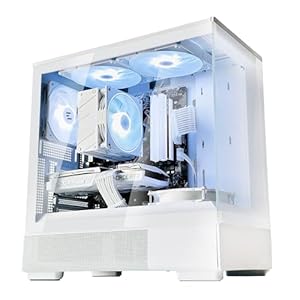
Zalman P10 Micro ATX Case, MATX PC Case with 120mm ARGB Fan Pre-Put in, Panoramic View Tempered Glass Entrance & Aspect Panel, USB Sort C and USB 3.0, White


Wireless Keyboard and Mouse, Ergonomic Keyboard Mouse – RGB Backlit, Rechargeable, Quiet, with Phone Holder, Wrist Rest, Lighted Mac Keyboard and Mouse Combo, for Mac, Windows, Laptop, PC
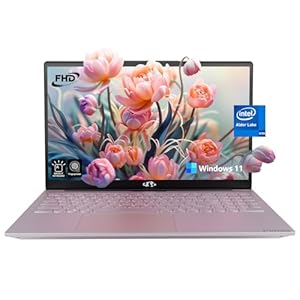
Nimo 15.6 FHD Pupil Laptop computer, 16GB RAM, 1TB SSD, Intel Pentium Quad-Core N100 (Beat to i3-1115G4, As much as 3.4GHz), Backlit Keyboard, Fingerprint, 2 Years Guarantee, 90 Days Return, WiFi 6, Win 11
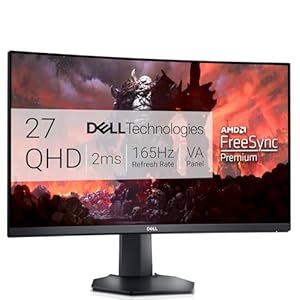
Dell S2722DGM Curved Gaming Monitor – 27-inch QHD (2560 x 1440) 1500R Curved Display, 165Hz Refresh Rate (DisplayPort), HDMI/DisplayPort Connectivity, Height/Tilt Adjustability – Black
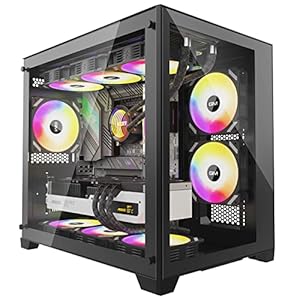
GIM Micro ATX PC Case with 2 Tempered Glass Panels Mini Tower Gaming PC Case Micro ATX Case with 2 Magnet Mud Filters, Gaming Pc Case with USB3.0 I/O Port, Black with out Followers