Thinking about it, it’s kind of amazing how many devices we put to sleep in 2026 instead of powering them down. In all likelihood, your smartphone and tablet are on 24/7, along with any smart speakers or TVs. Even smartwatches and VR headsets are expected to stay on to some degree when we’re not wearing them, if just to fetch software updates and be ready to go at a moment’s notice. Back in the 1990s, you would’ve been called crazy for keeping your TV or Discman on.
The same goes for computers. When I was growing up, putting a PC to sleep wasn’t even an option for the longest time, yet now it’s de facto behavior for many users — it’s even baked into laptops as an automatic function when you close the lid. What exactly happens when you put a PC to sleep, though? What keeps going, and what stops? Is it problematic to never shut down? There are answers, some of which could be very important to the health and functionality of your machine.
What’s the difference between putting a PC to sleep and shutting down?
Going beyond the surface details
The most obvious difference is that whereas shutting down stops Windows completely, putting it to sleep leaves it in a ready state. Apps are not only left in RAM, but in the exact state you had them. When I wake up my work PC, for instance, Chrome resumes its previous window placement with all my tabs up, and apps like Slack and Spotify are running minimized. There’s very little I have to do to get cracking in the morning.
Conversely, cold-booting a PC takes time. With SSDs, DDR5 RAM, and multi-core processors, this is faster than ever before — but it can still take a couple of minutes or more to get from hitting the power button to having all your startup apps loaded, at least if you have a workstation like mine. Then you have to open any apps that don’t launch automatically — so by the time you’re ready to go, several minutes may have gone by. That can be impractical if your job involves time-sensitive tasks.
Another consequence of Sleep mode is power consumption. To keep apps in memory and other essential functions going, a base level of power is needed. This is much lower than when your PC is active, but not the zero (or near-zero) amount from shutting down. The exact amount of power draw depends on a PC’s configuration, although a common range is between 1 to 15W. For the sake of comparison, many phone chargers consume more than 15W, and Philips Hue’s top-of-the-line color smart bulb uses no more than 9.5W.
A lot of invisible processes keep running in Sleep mode. Wake timers trigger scheduled tasks, USB ports detect input, and some network functions continue to operate.
Something you may not have considered is that a lot of invisible processes keep running. Wake timers, for example, can trigger tasks ranging from email sync to software updates, saving time when you’re actually at the keyboard. USB ports may auto-detect input, letting you wake your PC by hitting a key or button. Depending on UEFI/BIOS and Windows settings, your PC may even be able to power or charge connected USB devices.
A double-edged sword is that Ethernet and Wi-Fi adapters should remain on. This is required for a lot of downtime tasks, and can allow for remote access to a PC if options like Wake-on-LAN are enabled. With that, though, comes a security risk. In theory, a determined hacker could exploit this to break into your system. If you do allow remote wakeup, it’s vital that you have tough security enabled for both Windows and your router. Naturally, remote hacking is impossible if a machine is completely off.
One potential downside to sleep is that all your computer’s caches and processes remain intact. Ordinarily this is a good thing, since it saves time — the reason a cold boot is so slow is that your PC has to re-initialize many things, albeit less when you have Fast Startup enabled. Over time, however, system caches may accumulate outdated, unnecessary, or even corrupt data, creating slowdowns and glitches. As for processes, a fresh boot will relaunch the ones that have been configured for startup, and only those — so this can sometimes clear up problems with extra or misbehaving functions. Note that if you want a truly fresh start, you may have to use Windows’ Restart command instead, since shutdowns can preserve some data for faster boots.
How often should you shut down your PC?
No single answer

Under most circumstances, it’s fine to put a PC to sleep all the time if you want rapid access. I’ll sometimes go multiple weeks between reboots without problems. I should add, though, that I regularly close memory-hungry apps and processes to maintain performance, and leave remote wakeup off for security. I’m also using a mid-range PC with 32GB of RAM and plenty of horsepower, so any performance hitches are usually minor.
Preferably, you should power down at least once per month, if not every week. This will not only give some caches and processes a fresh start, but reduce your power bill slightly, and put less strain on your system. Low power still generates some heat, preventing your system from fully cooling down.
You may, of course, want to shut down even more frequently if you can afford to. This doesn’t provide meaningful help with speed or stability, but it does minimize strain and power demand. And as I mentioned, it’s more secure if you want to keep remote access as an option. Remember — even if you shut your machine off whenever you’re done with it, your Windows login should be protected with a strong password, and set to auto-lock after a set period of inactivity.
Preferably, you should power down at least once per month, if not every week. This will not only give some caches and processes a fresh start, but reduce your power bill slightly, and put less strain on your system.
Shutting down should be a daily habit with laptops when you’re not plugged in. While some laptops have enough battery life to last more than a day with mild use, the ideal charge percentage for lithium-ion cells is between 20 and 80% — putting a laptop to sleep for too long can leave it running on fumes or completely dead, accelerating the decay of battery health. If nothing else, it’s good to have a usable amount of power if you need to bolt out the door.
In some situations, there’s not much choice but to avoid both Sleep mode and shutting down. If you run media server software like Plex or Jellyfin, putting your PC to sleep may still cut off access to movies, music, and TV shows on other devices unless that platform supports remote wakeup. Keeping Windows fully active is also sometimes necessary to complete long downloads and file transfers, or rendering tasks like video exports and 3D modeling. Unfortunately, a lot of apps either require too much processing power to work in a sleep state, or simply need to operate in real-time.
Trending Products
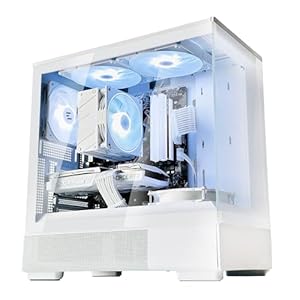
Zalman P10 Micro ATX Case, MATX PC Case with 120mm ARGB Fan Pre-Put in, Panoramic View Tempered Glass Entrance & Aspect Panel, USB Sort C and USB 3.0, White


Wireless Keyboard and Mouse, Ergonomic Keyboard Mouse – RGB Backlit, Rechargeable, Quiet, with Phone Holder, Wrist Rest, Lighted Mac Keyboard and Mouse Combo, for Mac, Windows, Laptop, PC

Nimo 15.6 FHD Pupil Laptop computer, 16GB RAM, 1TB SSD, Intel Pentium Quad-Core N100 (Beat to i3-1115G4, As much as 3.4GHz), Backlit Keyboard, Fingerprint, 2 Years Guarantee, 90 Days Return, WiFi 6, Win 11

Dell S2722DGM Curved Gaming Monitor – 27-inch QHD (2560 x 1440) 1500R Curved Display, 165Hz Refresh Rate (DisplayPort), HDMI/DisplayPort Connectivity, Height/Tilt Adjustability – Black
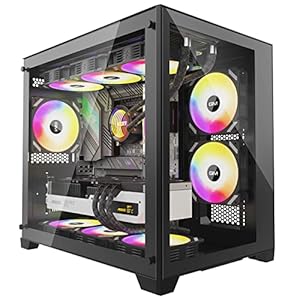
GIM Micro ATX PC Case with 2 Tempered Glass Panels Mini Tower Gaming PC Case Micro ATX Case with 2 Magnet Mud Filters, Gaming Pc Case with USB3.0 I/O Port, Black with out Followers