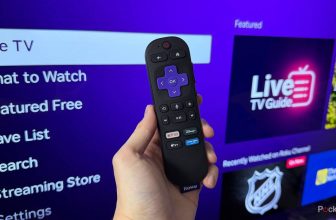
A memory of mine that’s come up repeatedly in recent times is getting a first-generation Google Chromecast as a gift. This was way back in the early 2010s, when most smart TVs were stuck with terrible proprietary apps, and add-on streamers were either expensive or not very good. The Chromecast managed to be both cheap and good with a clever solution — using your phone or computer as the interface. That had its own limitations, of course, but it was worlds better than trying to navigate through a TV’s half-baked UI.
Fast-forward to 2026, and Google Cast is de facto on many TVs, often alongside Apple’s equivalent AirPlay technology. If you’re using those to push movies and shows to your TV, though, you might want to think twice, particularly when it comes to AirPlay. It’s not that you’ll get a terrible experience. Rather, it’s that you might not be getting the most out of your home theater setup.
Google Cast vs Apple AirPlay
A clear winner in many circumstances
Superficially, both technologies function the same way. You pick media to play in a phone, tablet, or computer app, then tap an icon to send it to your TV or another display over Wi-Fi. Something I like to do at bedtime, in fact, is cast YouTube to my Nest Hub — I have a constantly-changing playlist that’s designed to lull me to sleep, then hopefully make it easy to fall back asleep when I inevitably wake up in the middle of the night.
If you care about fidelity of movies and shows, though, Google Cast is the preferable technology. That’s because all it’s doing, usually, is telling a native app on your TV to go fetch a particular piece of media for playback. There may be additional controls, such as a shareable queuing system in the case of YouTube, but it’s your TV that’s handling the actual streaming.
AirPlay is very different. While “fetch” commands are possible, in some cases, it’s pushing media directly from the source device to your TV. This matters for a few reasons, the first being that casting can be highly dependent on that peer-to-peer connection. If the link becomes choked or unstable for some reason, that may cause the quality of video to suffer. This contrasts with Google Cast, where it’s normally only your TV’s connection that matters — you could wander off anywhere and queued videos would keep playing.
If you care about fidelity of movies and shows, Google Cast is the preferable technology.
More importantly, AirPlay can sometimes default to audio and video formats below what your TV is capable of. While 4K HDR (high dynamic range) is possible, there’s a risk that it will scale back to 1080p and/or SDR (standard dynamic range) if your connection is less than ideal. Likewise, sound may revert to 5.1-channel surround sound or even stereo, no matter if the media you’re trying to play was encoded in Dolby Atmos. Essentially, it can struggle with anything that demands a high bitrate. If you want to guarantee a movie will play in 4K with Dolby Atmos and Dolby Vision, you’re better off grabbing your TV remote than casting from your phone.
That’s not to dismiss AirPlay entirely. It may well be able to do what you need, particularly if it is able to get your TV to fetch content itself. It seems though that you’re most likely to get the best results casting to an Apple TV 4K, which is somewhat redundant.
Also, Google Cast is hardly perfect. App developers not only have to support it, but decide what fidelity they’re going to allow. Casting may sometimes be reduced to mobile quality, in which case there won’t be any advantage over AirPlay. When that’s not a problem, some apps may omit formats like Dolby Atmos. I wouldn’t complain about losing Atmos myself — but if you’ve invested a lot in a sound system, you’ll want to doublecheck compatibility.
So when should you use Google Cast or AirPlay?
A secondary weapon

The best use of either technology, I’ve found, is getting around the limitations of a TV’s native software. Some apps just aren’t available on certain platforms, one of the most conspicuous examples being Twitch. That’s one of the most popular livestreaming services on the planet, mostly for gaming — yet there’s no official support in many places you’d want it, such as Roku OS. In some circumstances, Google Cast or AirPlay may be the only way of watching something on a big screen, at least short of hooking up an HDMI cable to your phone, tablet, or laptop.
This is possible because both technologies support something called screen mirroring. As the name implies, this is a one-for-one copy of whatever’s on your device’s display. It’s less than ideal, since you can’t expect 4K HDR, much less Dolby Atmos. Your immersion can also be broken by unwanted interface elements like notifications. Yet because it doesn’t discriminate about what’s onscreen, you can put anything on your TV, even web video. The only limitations are your Wi-Fi and whether your TV is compatible with a device’s casting technology. Thankfully, many sets support both Cast and AirPlay.
Mirroring additionally supports content beyond movies and shows, some obvious examples being photos and music. You may be able to get some legitimate work done from a Mac or Windows PC, assuming the lag doesn’t interfere. With some VR headsets, like the Meta Quest 3 and Apple Vision Pro, you can even duplicate your view for others. That might seem like a gimmick — but it can make VR much more of a social experience, since your friends can see you play Beat Saber or Arkham Shadow instead of watching your hands flail around.
Quick tips on making casting better
Bandwidth rules supreme

Whether you’re streaming directly from a device, or handing over the work to a native TV app, it’s absolutely essential that your Wi-Fi network be in order. For starters, your router should be equipped with Wi-Fi 6 or later. Wi-Fi 5 (a.k.a. 802.11ac) can potentially be fine, but it’s an old, inefficient standard that can’t exploit what modern devices are capable of, including your TV. It’s also limited in the number of simultaneous connections it supports, which can lead to devices being kicked offline when than limit is hit.
For starters, your router should be equipped with Wi-Fi 6 or later. Wi-Fi 5 can potentially be fine, but it’s an old, inefficient standard.
With AirPlay, keep your casting device in the same room as your TV whenever possible, and avoid switching apps midstream if you’re using an iPhone or iPad. You can usually do that safely — but in some circumstances, that may change the media that’s being cast. Naturally, this is true for both AirPlay and Google Cast when it comes to screen mirroring.
Be mindful of other traffic that may be going on in your home. When other people are streaming 4K movies or downloading large files, that may cramp available bandwidth enough to have an impact. If so, you’ll either have to be patient or ask someone to interrupt what they’re doing.
Trending Products
Zalman P10 Micro ATX Case, MATX PC Case with 120mm ARGB Fan Pre-Put in, Panoramic View Tempered Glass Entrance & Aspect Panel, USB Sort C and USB 3.0, White


Wireless Keyboard and Mouse, Ergonomic Keyboard Mouse – RGB Backlit, Rechargeable, Quiet, with Phone Holder, Wrist Rest, Lighted Mac Keyboard and Mouse Combo, for Mac, Windows, Laptop, PC
Nimo 15.6 FHD Pupil Laptop computer, 16GB RAM, 1TB SSD, Intel Pentium Quad-Core N100 (Beat to i3-1115G4, As much as 3.4GHz), Backlit Keyboard, Fingerprint, 2 Years Guarantee, 90 Days Return, WiFi 6, Win 11
Dell S2722DGM Curved Gaming Monitor – 27-inch QHD (2560 x 1440) 1500R Curved Display, 165Hz Refresh Rate (DisplayPort), HDMI/DisplayPort Connectivity, Height/Tilt Adjustability – Black
GIM Micro ATX PC Case with 2 Tempered Glass Panels Mini Tower Gaming PC Case Micro ATX Case with 2 Magnet Mud Filters, Gaming Pc Case with USB3.0 I/O Port, Black with out Followers