Modern laptop users are spoiled, if you look back on the history of tech. Early models stretched the definition of “portable” in size and weight, and of course had vastly inferior performance. My current gaming laptop renders real-time 3D graphics that put early Pixar movies to shame. Back at university, the hand-me-down machine I had was only good enough to take notes.
The gap becomes all the wider when you look at battery life. Apple’s first laptop, the Macintosh Portable, lasted for 10 hours at best on a charge, and kept losing the same amount of power even when it was turned off. Contrast that with the M4 MacBook Air, which is rated for up to 18 hours, and will probably last longer than that if you put it to sleep.
That said, there are times when any laptop owner can find themselves needing to squeeze the most out of their battery. Perhaps it’s rushing from flight to flight on an international trip, while still trying to get work done. If you have a gaming laptop like mine, it’s only going to survive three to four hours of gameplay without plugging in. There are, thankfully, a variety of tactics you can fall back on.
Avoiding video streaming and 3D gaming
A necessary evil
This one’s no fun, but the cold, hard reality is that anything that taxes a laptop’s processors to the limit is going to rapidly accelerate battery drain. The worst offenders are 3D games — the most impressive ones actually put more demand on the GPU (graphics processor) than the CPU, yet strain both, with the latter handling tasks like AI and object physics. In desktop PCs, some dedicated graphics cards cost more than the rest of the machine they’re attached to.
It’s rare for gaming laptops to last more than three or four hours running a game with photorealistic graphics, since they also rely on dedicated GPUs. You might run into similar limits with some productivity apps, such as 3D modeling or CAD tools.
2D games and video streaming are less demanding, but still hike processor usage in a way that will increase drain. If you’ve only got a couple of hours left on your laptop, but still need to get work done, you might want to think twice about playing Shinobi or watching an episode of Twin Peaks before you get started.
Enabling low-power mode
A failsafe measure

Just as on iPhones and Android devices, Macs and Windows PCs have low-power modes (under different names) that throttle performance in the name of eking out a little more juice. You can access the macOS feature by going to Apple menu -> System Settings -> Battery, then selecting Low Power from the On battery drop-down menu. The Windows equivalent is Best Power Efficiency under Settings -> System –> Power & battery -> Power Mode -> On battery. Note that you can configure separate settings for when you’re plugged in, maximizing performance. An alternate Windows option is Power Mode -> Energy saver, which can be made to kick in automatically at a specified battery percentage.
Apple is vague about what its Low Power Mode does beyond scaling back processor and fan speeds, but it may also limit brightness, refresh rates, and background tasks like email and photo sync. You can expect similar actions out of both Best Power Efficiency and Energy Saver in Windows.
As a rule, it’s smart to avoid any low-power mode unless it’s absolutely necessary, or you’re not handling anything more than web browsing or light productivity. The performance hit may cause apps to take longer to load, and make some games unplayable at normal detail levels. Even those easy productivity tasks could become annoying, since your screen won’t be as bright, and may turn off quicker than you’re used to. If you forget to manually sync emails, you might miss an important message.
Turning off unused wireless radios and lighting
Don’t be draconian

One lesser source of power drain is your laptop’s Wi-Fi, Bluetooth, and/or cellular radios. Wi-Fi and cellular are the worst of the three, as they’re not only high-speed when connected, but often hunting around for nearby routers or towers.
Think twice about turning off all your wireless radios off, whether manually or through a shortcut like Windows’ Airplane Mode. If you’re using a Bluetooth mouse, keyboard, or headphones, you’ll lose your connection, and it’s not worth it for the low amount of energy Bluetooth consumes. Regardless of whether you’re on the internet, you may need to keep Wi-Fi on for purposes like hotspot tethering or local file transfers.
Lighting is probably even less of a burden than Bluetooth, but if you’re in a well-lit space, there’s no sense leaving your keyboard’s backlighting on when you’re running on fumes. Owners of gaming laptops should automatically disable their lighting on battery power — multi-color effects might look cool, but animating and syncing them is a waste when power is already in short supply.
Closing background apps
What do you really need?

Multitasking has been around for decades, yet for much of that, it was best to close everything non-essential for performance reasons. Modern computers are so powerful, though, that on mine, I can run Slack, Spotify, and other apps while playing games, and the CPU barely bats an eye.
The more apps you have running in the background, though, the more of that power your computer has to tap into. When you’re on battery, it’s vital to close anything minimized that isn’t helping with basic OS functions or the main app(s) you’re using. On a Mac, one fast way of accomplishing this is by checking for Dock apps that have a dot under them. If you see one you don’t need, right-click on the icon and choose Quit. The same thing applies to Windows 11, except that you’ll choose Close window instead. You may also want to right-click on some System Tray items (on the right side of the Taskbar).
Both platforms have tools for closing invisible background processes as well, called Activity Monitor and Task Manager, respectively. I’m not going to go into detail about them however, simply because you shouldn’t consider killing processes unless you’re fairly tech-savvy. It’s true that some of them can create unnecessary RAM and CPU usage — but if you halt the wrong one by accident, you may temporarily cripple some OS services, or even cause a system crash. A reboot may be required to put everything back to normal.
Unplugging wired peripherals
Your laptop isn’t a good phone charger

This one is last on the list because for the most part, people only tend to plug in crucial items when they’re on battery, and it’s not like most USB peripherals consume that much energy. The draw from a wired mouse or keyboard on your laptop is negligible, sometimes under 0.5W. Gaming accessories with RGB lighting might be hungrier, but probably under 3W.
Some device categories do consume more than that. A portable SSD, for example, might pull anywhere from 4 to 15W. Expect similar numbers if you try to charge a phone or tablet, or connect a portable monitor. If you’ve got several of these devices connected simultaneously, they may become a problem.
Trending Products
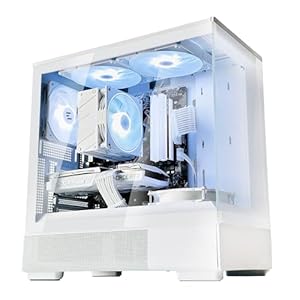
Zalman P10 Micro ATX Case, MATX PC Case with 120mm ARGB Fan Pre-Put in, Panoramic View Tempered Glass Entrance & Aspect Panel, USB Sort C and USB 3.0, White


Wireless Keyboard and Mouse, Ergonomic Keyboard Mouse – RGB Backlit, Rechargeable, Quiet, with Phone Holder, Wrist Rest, Lighted Mac Keyboard and Mouse Combo, for Mac, Windows, Laptop, PC

Nimo 15.6 FHD Pupil Laptop computer, 16GB RAM, 1TB SSD, Intel Pentium Quad-Core N100 (Beat to i3-1115G4, As much as 3.4GHz), Backlit Keyboard, Fingerprint, 2 Years Guarantee, 90 Days Return, WiFi 6, Win 11
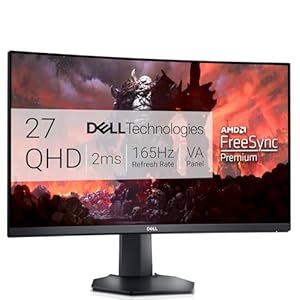
Dell S2722DGM Curved Gaming Monitor – 27-inch QHD (2560 x 1440) 1500R Curved Display, 165Hz Refresh Rate (DisplayPort), HDMI/DisplayPort Connectivity, Height/Tilt Adjustability – Black
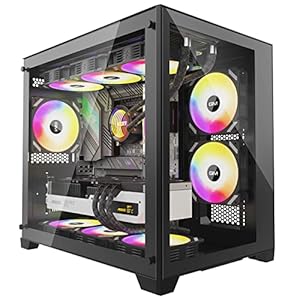
GIM Micro ATX PC Case with 2 Tempered Glass Panels Mini Tower Gaming PC Case Micro ATX Case with 2 Magnet Mud Filters, Gaming Pc Case with USB3.0 I/O Port, Black with out Followers