I’m not a purist when it comes to home theater tech. As far as I’m concerned, a lot of budget options are miraculous compared to what I had growing up. In the ’80s and early ’90s, a 50-inch TV was considered gigantic, and even my richest friends didn’t have access to anything better than LaserDisc when they wanted to pop in a movie. For some perspective, the resolution on my Apple Watch Ultra is sharper than LaserDisc, as is DVD. And of course, you still needed a VCR to watch the majority of releases.
You have to draw the line somewhere, though, and when it comes to home theater audio, I refuse to put up with Bluetooth-based speakers. It can be tempting to choose a Bluetooth soundbar to save some money, but here’s why you’ll probably end up regretting that in the long run. You may actually regret it in the short-term too if you don’t pay very close attention to specs.
What’s so terrible about Bluetooth speakers for a TV?
A wireless problem
Before I continue, it’s important to get some definitions straight. I’m not talking about TV speakers that happen to include Bluetooth in case you want to play music from your phone or tablet. Rather, I’m talking about speakers that rely on Bluetooth to connect to your TV, since they don’t have anything better or you’ve simply chosen to go that route.
On a convenience level, Bluetooth is great. All you have to do is put your speaker into pairing mode, then complete the process on your TV as if you were connecting a pair of headphones. There may be some adjustments you can make via your TV’s Settings menu, or buttons on the speaker itself, but voila — you’re ready to go.
The first potential problem is audio sync. All wireless technologies introduce extra lag. If you’re lucky enough to have a Wi-Fi audio system (more on that later), that lag is likely minimal and/or automatically compensated for. I have a pair of HomePod minis connected to my dining room’s Apple TV 4K, and in most cases, you’d never know the difference versus a wired setup.
Bluetooth is a low-power technology that’s inherently laggier than Wi-Fi, and doesn’t have much bandwidth to work with. Audio won’t necessarily fall out of sync, particularly if your TV and speaker support a codec like aptX Low Latency. But the risk is higher, and if desync happens, you’ll have to hope your TV has built-in correction options in its sound settings.
A generic Bluetooth speaker may well pair with your TV. Yet if it doesn’t support the right codecs, it may not only fall out of sync, but default to poor overall audio quality.
A greater consequence of low bandwidth is its limitations on fidelity. Bluetooth is fine for compressed digital stereo — beyond that, however, the most it can handle is virtualized surround sound. This might confuse you if you’re used to hearing Dolby Atmos from your phone’s earbuds, but that’s actually a prime example of what I’m talking about. Most headphones lack more than two audio channels, so what you’re really hearing is stereo, with processing tricks (like artificial delay) used to fool you into thinking sound is coming from a particular direction. Bluetooth isn’t designed for genuine multi-channel surround sound, much less lossless standards like Dolby TrueHD or DTS-HD Master Audio.
Speaking of codecs, there’s a strong dependency on matching them, and not just when it comes to latency. A generic Bluetooth speaker may well pair with your TV — yet if it doesn’t support the right codecs, it may not only fall out of sync, but default to poor overall audio quality. In an extreme scenario, the results might sound worse than your internal speakers except for being louder and more bass-heavy.
Last on the agenda is reliability. Bluetooth 5.x should be pretty solid within the range of your TV. Nevertheless, it’s still more prone to interference than Wi-Fi, particularly as a low-power standard that’s sometimes cutting through a sea of competing wireless signals. I’m annoyed enough by my headphones dropping out for a second at the gym — I’d want to toss a speaker out the window if it kept ruining dramatic moments in my favorite movies.
So what should I use instead of a Bluetooth speaker?
You’ve got many options

Under most circumstances, the best choice is an HDMI speaker. A wired connection always provides the lowest possible latency, and HDMI in particular has the bandwidth not just for spatial audio formats like Atmos and DTS:X, but for lossless quality if you’re hooked up to an eARC port via HDMI 2.1 or later. You’ll also be able to take advantage of your TV’s CEC features, which let you control volume using your normal remote, and turn speakers on and off alongside your TV.
More importantly, HDMI is plenty affordable. You don’t need to spend on something extravagant like a Sonos Arc — a 2.0-channel Amazon Fire TV Soundbar is $100, and there are even cheaper options if you’re willing to gamble on unknown brands. By going the budget route, you may be stuck with ARC instead of eARC, among other sacrifices. In light of the problems with Bluetooth, however, there’s not much reason to complain.
If you really want to maximize bang for the buck, you may be able to find a worthwhile optical/TOSLINK speaker. While optical cables can’t handle Atmos or DTS:X, they do have enough bandwidth for 5.1-channel surround, and better models — like my Sonos Ray — can sound absolutely fantastic. The biggest catch is that optical doesn’t support CEC, so you’ll need to use a separate remote, or “train” a speaker on the one for your TV.
A wired connection always provides the lowest possible latency, and HDMI in particular has the bandwidth not just for spatial audio, but for lossless quality if you’ve got eARC.
3.5mm speakers should be a last-ditch option. They’re limited to 2.1-channel analog sound, with inferior quality next to HDMI and optical. About the only advantages over Bluetooth are latency and reliability, and that second point is debatable, since line noise could lead to issues like hums and buzzing.
At this point, you may be wondering about Wi-Fi speakers. Most Wi-Fi systems actually revolve around an HDMI-connected primary speaker, simply using Wi-Fi to feed data to satellites. True Wi-Fi-only systems are rare, and are often tied to the brand of the TV (or media streamer) you’re using. If you’ve got a Fire TV, for instance, your only fully wireless option involves pairing Amazon Echo speakers. One way around this is by buying an Apple TV 4K — a little while ago, Apple finally opened up Wi-Fi speaker support to anything that supports AirPlay, which includes quite a few options at different price tiers.
No matter how you slice it, there’s little reason to bother with a Bluetooth-based speaker unless you already have one or can get one for free. Conceivably, that could change as Bluetooth 6.x becomes more widespread, but even that technology is playing catch-up, and will never directly compete with Wi-Fi and HDMI.
Trending Products
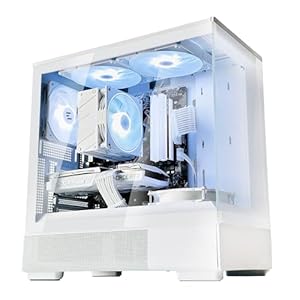
Zalman P10 Micro ATX Case, MATX PC Case with 120mm ARGB Fan Pre-Put in, Panoramic View Tempered Glass Entrance & Aspect Panel, USB Sort C and USB 3.0, White


Wireless Keyboard and Mouse, Ergonomic Keyboard Mouse – RGB Backlit, Rechargeable, Quiet, with Phone Holder, Wrist Rest, Lighted Mac Keyboard and Mouse Combo, for Mac, Windows, Laptop, PC
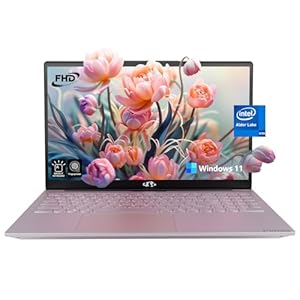
Nimo 15.6 FHD Pupil Laptop computer, 16GB RAM, 1TB SSD, Intel Pentium Quad-Core N100 (Beat to i3-1115G4, As much as 3.4GHz), Backlit Keyboard, Fingerprint, 2 Years Guarantee, 90 Days Return, WiFi 6, Win 11
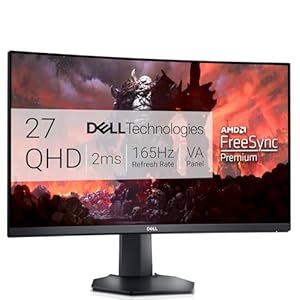
Dell S2722DGM Curved Gaming Monitor – 27-inch QHD (2560 x 1440) 1500R Curved Display, 165Hz Refresh Rate (DisplayPort), HDMI/DisplayPort Connectivity, Height/Tilt Adjustability – Black
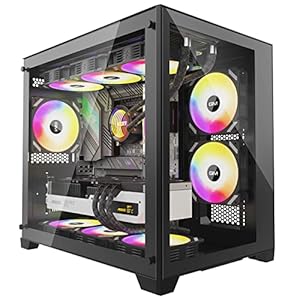
GIM Micro ATX PC Case with 2 Tempered Glass Panels Mini Tower Gaming PC Case Micro ATX Case with 2 Magnet Mud Filters, Gaming Pc Case with USB3.0 I/O Port, Black with out Followers