Smart TVs come loaded with ports nowadays, and when you look at the back of yours, chances are you’ll find a few HDMI ports, a USB-A port, and an Ethernet port. Personally, while I’ve always used the HDMI and USB ports on my TV, I have always avoided the Ethernet port, and for a very simple reason.
It’s true that Ethernet ports are a great way to establish a solid, reliable connection between your smart TV and your router, and I’m not disputing that. The reason why I avoid my TV’s Ethernet port, and what I’m disputing, is the idea that using an Ethernet port on a smart TV delivers faster internet speeds than Wi-Fi, because in many cases it doesn’t. Here’s why.
Ethernet ports on smart TVs have a speed limitation
Wi-Fi is often faster
On the vast majority of smart TVs, the Ethernet port actually has a pretty significant speed limitation of 100 Mbps, or what is often referred to as 10/100 Ethernet. In all fairness, that’s usually fast enough to stream in 4K on most streaming services. However, if you want your TV to load everything as quickly and smoothly as possible, it’s very likely that its Wi-Fi is faster than its Ethernet port.
How? Well, chances are your smart TV is equipped with Wi-Fi 5 or a newer standard, like Wi-Fi 6 or Wi-Fi 6E, which can achieve much faster speeds than 100 Mbps while still providing a strong, stable connection.
For example, on my LG C5 TV, which is equipped with Wi-Fi 6E, when I ran a speed test using the Netflix app, my connection speed was 213 Mbps, which is more than double what it would be if I used the Ethernet port. That means content will load much faster over my TV’s Wi-Fi than over its Ethernet port. And in all my time using Wi-Fi on my TV, I’ve never had issues with buffering or sudden quality drops that weren’t my ISP’s fault.
So, with that in mind, you might be wondering: why don’t smart TVs come with faster Ethernet ports? The most likely answer is simple: cost savings.
Most streaming services recommend an internet speed of around 25 Mbps for 4K streaming. So presumably, TV manufacturers like LG, Samsung, and Hisense look at that requirement and decide there’s no reason to include a Gigabit Ethernet port. Instead, they cut costs by sticking with a cheaper 10/100 Ethernet port, even though many people could benefit from much faster wired speeds on their TV if it had a Gigabit port.
Should you choose Wi-Fi or Ethernet for your smart TV?
You can test your smart TV’s internet connection to find out what to use

I want to make it clear that, while using Wi-Fi on your smart TV is likely faster than using its built-in Ethernet port, that doesn’t mean you should necessarily avoid Ethernet altogether.
Depending on your home network setup and the speeds you get from your ISP (Internet Service Provider), it might still make perfect sense to use your TV’s Ethernet port. If your Wi-Fi can’t consistently reach speeds above 100 Mbps anyway, or if your router is too far from your TV to provide a stable connection, a wired connection could still be the better, more reliable option.
On the flip side, if you’re in a position like mine where your smart TV has a stable Wi-Fi connection to your router and your internet speed is fast enough, then using your smart TV’s Wi-Fi rather than its Ethernet port makes a lot more sense. You’ll get the fastest speeds available, possibly double or triple the speed of your TV’s 10/100 Ethernet port, and have no problem loading 4K movies and shows with Dolby Atmos and Dolby Vision.
If you want to find out whether Wi-Fi or Ethernet is best for your smart TV, the easiest way to check is to run a speed test in the Netflix app. When you open the Netflix app on your TV, go to settings and select Get Help. From there, select Check your network, and Netflix will then run an internet speed test. If your smart TV’s connection speed is greater than 100 Mbps, you’ll likely want to stick with Wi-Fi, but if it’s under 100 Mbps, using your TV’s Ethernet port may be more reliable.
Trending Products
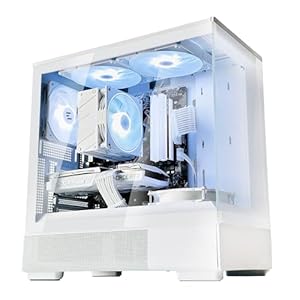
Zalman P10 Micro ATX Case, MATX PC Case with 120mm ARGB Fan Pre-Put in, Panoramic View Tempered Glass Entrance & Aspect Panel, USB Sort C and USB 3.0, White


Wireless Keyboard and Mouse, Ergonomic Keyboard Mouse – RGB Backlit, Rechargeable, Quiet, with Phone Holder, Wrist Rest, Lighted Mac Keyboard and Mouse Combo, for Mac, Windows, Laptop, PC
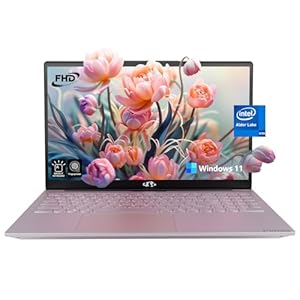
Nimo 15.6 FHD Pupil Laptop computer, 16GB RAM, 1TB SSD, Intel Pentium Quad-Core N100 (Beat to i3-1115G4, As much as 3.4GHz), Backlit Keyboard, Fingerprint, 2 Years Guarantee, 90 Days Return, WiFi 6, Win 11
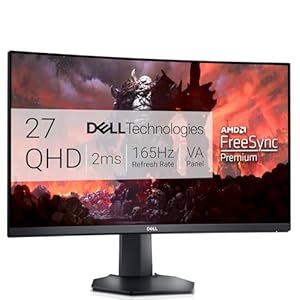
Dell S2722DGM Curved Gaming Monitor – 27-inch QHD (2560 x 1440) 1500R Curved Display, 165Hz Refresh Rate (DisplayPort), HDMI/DisplayPort Connectivity, Height/Tilt Adjustability – Black
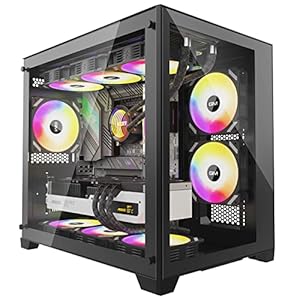
GIM Micro ATX PC Case with 2 Tempered Glass Panels Mini Tower Gaming PC Case Micro ATX Case with 2 Magnet Mud Filters, Gaming Pc Case with USB3.0 I/O Port, Black with out Followers