One could be forgiven for thinking that automation tools would make arduous tasks redundant, and make work more relaxing overall. But this elides an important law of the universe: the ratchet of productivity only turns one way. That is, it’s a modern day truism that if automation—AI or otherwise—makes any sort of positive change in your work life, you’ll feel a sort of squeezing sensation, and additional work will materialize to erase any momentary feelings of relief.
According to a case study highlighted in some “in-progress research” from Aruna Ranganathan, who teaches management at UC-Berkeley and Xingqi Maggie Ye, a Ph.D. student who is part of Ranganathan’s Berkeley program, AI “intensifies” work, and certainly doesn’t make people’s days easier.
It sounds, in other words, like hell on earth.
If that is, paradoxically, what you want in your workday, then you probably work in a place like Silicon Valley, or even at OpenAI, where CEO Sam Altman has described AI’s ability to intensify his own work in ways that make him sound strangely awed and humbled (even as he expresses little to no regret about his ambition to annihilate knowledge worker jobs). “I don’t think I can come up with ideas fast enough anymore,” he said in an interview in October of last year, adding “I think it will mean that stuff just happens faster and that you can… that you can try a lot more stuff, and figure out the better ideas quickly.”
Altman’s experience may resonate with the workers mentioned in the article about Ranganathan and Ye’s research for Harvard Business Review. They describe an eight-month study into generative AI’s effects on working life at a company with about 200 employees. Employees “worked at a faster pace,” the authors write, covered a “broader scope of tasks,” and found themselves working “more hours of the day, often without being asked to do so.”
This was a workplace that, Ranganathan and Ye explain, didn’t mandate AI use. It just made enterprise AI tools available. This doesn’t sound like a 200-person workplace where widgets were being glued together. Instead, many of the roles described in the article involve engineering, writing code, and communicating in Slack, so it’s safe to say these were knowledge workers and software engineers, quite possibly making use of tools like Claude Code.
Due to AI, many of Ranganathan and Ye’s subjects, it seems, started expanding the scope of their jobs, usurping one another’s roles, and taking on roles coaching others on coding, or correcting their vibe-coded work. Hiring new employees may have been postponed or circumvented altogether, because employees “absorbed work that might previously have justified additional help or headcount.”
Workers also, it seems, furtively fed tasks into their AI tools while they were ostensibly in meetings, and submitted prompts while on breaks, while waiting for things to load, or while they were supposed to be having lunch.
How you interpret this case study is going to vary. If your workplace is a startup in “founder mode” and everyone in your office is working punishing hours in exchange for equity in a company that everyone hopes will be a unicorn, I’m guessing you’ll probably love the sound of this—particularly if you’re a CEO/founder and you’re planning to become a billionaire.
That’s far from a universal experience, however.
According to a 2024 Pew survey, about half of U.S. workers reported that they were either somewhat satisfied or “not too/not at all satisfied,” and the other half said they were “extremely/very satisfied.” That “extremely/very satisfied” group shrinks from 50% to 42% when the respondent has a lower income.
That survey also found that far and away the most satisfying aspects of a job according to respondents are other humans, with 64 percent reporting being “extremely/very satisfied” with their relationships with their co-workers. Skills development, meanwhile, ranked low, with 37 percent reporting being “extremely/very satisfied” with that aspect of a given job.
So I don’t get the impression that fewer people, having to learn to do more things, and work that seeps into breaks will help most people’s job satisfaction, but maybe I lack a certain kind of vision.
In other words, if instead of building an app, you’re someone who works as, say, a hospital receptionist or a school administrator, you’re probably not all that stoked about a hypothetical where hiring is postponed, you have to do other people’s jobs, you’ll work on your breaks, and instead of getting new, helpful software, you’re getting enterprise AI tools so you can make your own software.
But let’s not assume that all tech workers love this kind of productivity theater, or that the sense of greater productivity in Ranganathan and Ye’s case study is necessarily anything other than an illusion. An anonymous worker at the cybersecurity firm Crowdstrike wrote into the newsletter Blood in the Machine last year, and said workers at that company “have been encouraged to handle the additional per capita workload by simply working harder and sometimes working longer for no additional compensation,” and that “While our Machine Learning systems continue to perform with excellence, I have yet to be convinced that our usage of genAI has been productive in the context of the proofreading, troubleshooting, and general babysitting it requires.”
According to this person, “The net result is not a lightening of the load as has been so often promised,” and “Morale is at an all-time low.”
Trending Products
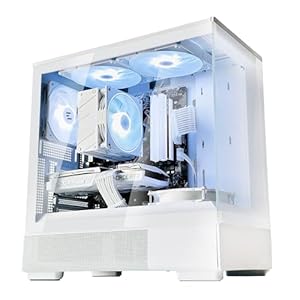
Zalman P10 Micro ATX Case, MATX PC Case with 120mm ARGB Fan Pre-Put in, Panoramic View Tempered Glass Entrance & Aspect Panel, USB Sort C and USB 3.0, White


Wireless Keyboard and Mouse, Ergonomic Keyboard Mouse – RGB Backlit, Rechargeable, Quiet, with Phone Holder, Wrist Rest, Lighted Mac Keyboard and Mouse Combo, for Mac, Windows, Laptop, PC

Nimo 15.6 FHD Pupil Laptop computer, 16GB RAM, 1TB SSD, Intel Pentium Quad-Core N100 (Beat to i3-1115G4, As much as 3.4GHz), Backlit Keyboard, Fingerprint, 2 Years Guarantee, 90 Days Return, WiFi 6, Win 11

Dell S2722DGM Curved Gaming Monitor – 27-inch QHD (2560 x 1440) 1500R Curved Display, 165Hz Refresh Rate (DisplayPort), HDMI/DisplayPort Connectivity, Height/Tilt Adjustability – Black
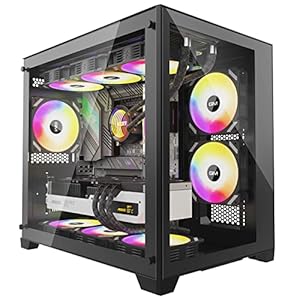
GIM Micro ATX PC Case with 2 Tempered Glass Panels Mini Tower Gaming PC Case Micro ATX Case with 2 Magnet Mud Filters, Gaming Pc Case with USB3.0 I/O Port, Black with out Followers