Picture this: You’re driving through somewhere like West Texas. The nearest gas station is around 40 miles away. Cell service is spotty, but because you pre-mapped your route, you’re not really sweating it. Then, all of a sudden, Apple CarPlay decides that it’s time to check out for the next 20 minutes of your drive. You look over in the passenger seat, and your partner is visibly concerned. You even start to sweat a little, too, when you realize that your gas gauge is hovering nicely around 1/4 tank.
This is no fiction, dear reader. Instead, it’s the reality of the most recent vacation my fiancé decided to undertake. We made it to our destination fine, but that wasn’t the only time CarPlay decided that its job was done mid-drive, only to clock back in later after I had moved a few miles, shut my car off, and rebooted the connectivity. In fact, this is a pretty common occurrence, and one most people can sympathize with. The big question I have now, though, is that in 2026, what other issues will still plague one of the most popular infotainment platforms on the market?
The king of mid-drive disconnections
Raise your hand if you’ve been victimized by Apple CarPlay connectivity
The biggest gripe of them all remains connectivity issues, especially with wireless CarPlay, which I rely on in my 2025 VW Atlas. Don’t get me wrong, I do still love my Atlas infotainment selections, but the random disconnections seem to be a common thread, no matter the vehicle. It happened again just a few days ago, as we tried to reach an unfamiliar location for engagement photos.
Wired connections are certainly more stable, but cords seem to fail more quickly than ever. If a vehicle offers wireless connectivity, it should at least be reliable in most cases. This is the biggest issue facing Apple CarPlay, but let’s not act like it’s the only one.
Siri is an incredibly weak link
Apple puts too much faith in one of its biggest selling points

It’s no secret that Siri has been behind the rest of its competitors for quite some time now, but that’s more evident in CarPlay than anything else. CarPlay leans heavily on Siri’s ability to hear you and understand commands, and when Siri doesn’t do just that (or just decides that it can’t work at that moment), the entire CarPlay experience falls apart.
Voice dictation errors abound, commands still get missed, and when Siri does hear you correctly, sometimes the lag in between the command and the actual action is far too lengthy. If the entire point of CarPlay is to be as hands-free as possible, the mark is consistently missed with Siri, because I would rather enter the commands myself than listen to what is supposedly the savior of CarPlay fumble through my voice commands. We thought iOS 26 would fix CarPlay, but in reality, it just put the old issues in some liquid-glass clothing.
App functionality remains a sticking point
Android Auto has CarPlay beat in this category, and not by a little

Many apps these days offer Apple CarPlay compatibility, but just because something is compatible doesn’t mean it’s any good. Apple keeps a tight leash on what developers can accomplish within the CarPlay interface, and as a result, apps are typically watered down, with far fewer features than their mobile counterparts. Even when parked, there are no video apps, and messaging control is incredibly limited, forcing usage of Siri (see previous point for how that’s going).
Third-party apps suffer from this more than anything else, though. There are even apps developed exclusively for CarPlay and Android Auto, and in nearly every one, the Android Auto version offers much better functionality than its counterpart. The sticking point is clear, and it’s a major reason some automakers are moving away from CarPlay entirely in favor of an Android-powered OS.
No two CarPlays are made the same
Vehicle integration plagues the platform’s UI

Some vehicles handle the CarPlay UI well, and some do not. For instance, my mother drove a 2021 Nissan Armada for a few years, and that was the single most hideous CarPlay adaptation I have ever seen. CarPlay only took up about 2/3 of the screen, and the rest was a Nissan interface that looked fine on its own but looked horrible when stacked up next to the CarPlay UI.
Why not just make it stretch the entire screen? It gets worse, though, like in the new Mazda CX-70 and CX-90s, where the entire screen functions via a wheel by the driver, except for when CarPlay is engaged. Then it becomes a touchscreen, and a screen designed for use from a distance forces drivers to crane their necks forward to change any setting. It’s the sole reason I didn’t just buy one, in fact.
You might look at these and say that they’re all minor inconveniences, but the issue is that we’ve all dealt with them, and we’re all using the same platform. With issues like these, it’s no wonder CarPlay is fighting for its life with big-time manufacturers in the automotive space.
Trending Products
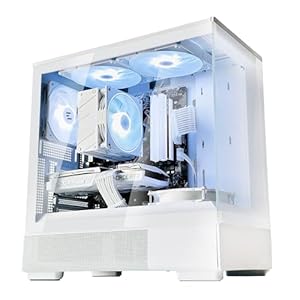
Zalman P10 Micro ATX Case, MATX PC Case with 120mm ARGB Fan Pre-Put in, Panoramic View Tempered Glass Entrance & Aspect Panel, USB Sort C and USB 3.0, White


Wireless Keyboard and Mouse, Ergonomic Keyboard Mouse – RGB Backlit, Rechargeable, Quiet, with Phone Holder, Wrist Rest, Lighted Mac Keyboard and Mouse Combo, for Mac, Windows, Laptop, PC

Nimo 15.6 FHD Pupil Laptop computer, 16GB RAM, 1TB SSD, Intel Pentium Quad-Core N100 (Beat to i3-1115G4, As much as 3.4GHz), Backlit Keyboard, Fingerprint, 2 Years Guarantee, 90 Days Return, WiFi 6, Win 11
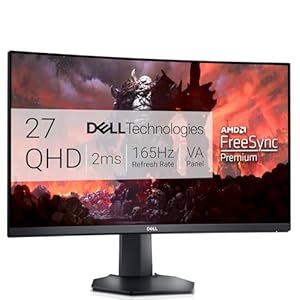
Dell S2722DGM Curved Gaming Monitor – 27-inch QHD (2560 x 1440) 1500R Curved Display, 165Hz Refresh Rate (DisplayPort), HDMI/DisplayPort Connectivity, Height/Tilt Adjustability – Black
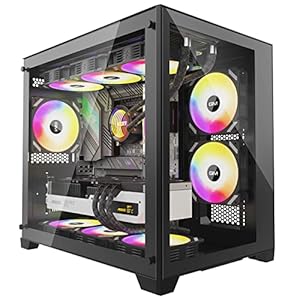
GIM Micro ATX PC Case with 2 Tempered Glass Panels Mini Tower Gaming PC Case Micro ATX Case with 2 Magnet Mud Filters, Gaming Pc Case with USB3.0 I/O Port, Black with out Followers

ASUS VA24EHE 23.8â Monitor 75Hz Full HD (1920×1080) IPS Eye Care HDMI D-Sub DVI-D,Black