The various home theater formats out there can be confusing. The average person might have a passing understanding that they want a setup with 4K, HDR, and Dolby Atmos, but they couldn’t necessarily tell you which variety of HDR is best, or what exactly Atmos does. Then there are the various HDMI specifications, smart home ecosystems, and Wi-Fi standards. It’s amazing anyone outside the professional sphere can keep on top of it.
An important starting point for anyone is breaking down the major Dolby Audio standards for consumers. There is competition, namely DTS and Eclipsa Audio, but Dolby is so dominant in the home theater world that you can’t afford to ignore it when you’re shopping for speakers, headphones, or TVs.
All the Dolby Audio standards you need to know
Dolby Surround
The most basic version of Dolby Surround was released in 1982, and is actually a home adaptation of Dolby Stereo, a cinema format dating back to the 1970s. The consumer version decodes four-channel audio into just three channels: left, right, and surround. You’re not really going to see this applied in modern products.
Some newer versions of Surround are still in use, however. 1987 saw the debut of Dolby Surround Pro Logic, which used newer decoding technology to let people hear those original four channels: left, right, center, and rear. Pro Logic would eventually get several iterations, which I’ll talk about in a minute.
What you’re more likely to see today is the 2014 rebranding of Surround. This simply upmixes stereo and other multi-channel signals to play over an Atmos system. It’s a replacement for all forms of Pro Logic, and you may not even see it listed in specs, given how fundamental it is.
Dolby Digital
Sometimes known as AC-3, Dolby Digital is extremely important. It’s a compression format that enables the more familiar 5.1-channel version of surround: three front channels, two rear ones, and a subwoofer. It can also be used for mono and stereo mixes.
Digital is omnipresent. You’ll find it on broadcast, satellite, cable, and antenna TV, as well as Blu-ray, DVD, and even Laserdisc. It’s also on game consoles and computers.
There are a few variants of Digital worth a mention. Digital EX adds a center rear channel for 6.1-channel sound, while Digital Plus is a high-bandwidth format that you might encounter on Blu-ray, streaming, or broadcasts. Digital Live is a real-time encoding technology for computers and consoles, converting signals into 5.1-channel Digital. AC-4 makes a few enhancements, including support for audio objects. More on that concept in the Atmos section.
Dolby Pro Logic
As I mentioned, the original purpose of Pro Logic was to bring four-channel cinema sound to the home. I won’t spend too much time on it, since it’s largely irrelevant now, but you may still encounter it under some circumstances.
After the original four-channel version of Pro Logic, Dolby introduced Pro Logic II in 2000. This included support for 5.1-channel Dolby Digital, but was also able to take any stereo input and break it into five distinct channels. The company would later upgrade to Pro Logic IIx — allowing upconversion to 6.1- or 7.1-channel sound — then Pro Logic IIz, which added height into mix, as well as 9.1-channel output. You can think of IIz as the precursor to Atmos.
Dolby TrueHD
This is Dolby’s lossless audio format. If you’re not familiar, lossless refers to the perfect replication of source material, whereas most compressed formats lose some nuance. In the case of TrueHD, you’re getting up to seven channels of 24-bit, 96kHz audio, plus a subwoofer. That’s well above CD quality.
The standard is extremely demanding. The major streaming services tend to use Digital or Digital Plus instead, even with Atmos, since lossless would only compound the heavy data consumption of 4K HDR video. On your end, the only connection formats that can handle it are HDMI 2.1 (over eARC), Wi-Fi, and Ethernet. Realistically, you’ll probably never hear TrueHD unless you’re watching something on Blu-ray.
Dolby Headphone/Virtual Speaker
These two are lumped together because they’re variations of the same basic concept: simulating 5.1-channel surround over stereo output. It’s less than ideal, since you’re not getting true channel separation, which by extension helps to separate sounds. It’s better than nothing, arguably, and simulation is the only way of achieving any surround effect on headphones. It can actually be quite effective in that context — having drivers directly in your ears makes it easy to trick your brain.
Dolby Atmos

Finally, we get to the culmination of Dolby’s efforts to date. Atmos is what’s known as a spatial audio format — instead of merely separating audio into channels, it allows the positioning of distinct “objects” in 3D space. A sound engineer might, for example, insert a jet fighter object that flies across your ceiling channels. Height is one of the marquee features of Atmos, although not mandatory. It can also be simulated in some cases with up-firing drivers that bounce signals, as on soundbars like the Sonos Beam.
In a home theater context, most Atmos systems are based on 5.1- or 7.1-channel layouts. More channels are possible, such as a “7.1.4” system that includes four ceiling satellites. Hypothetically, you can build a 24.1.10-channel setup, allowing for incredibly granular object placement.
Atmos with Digital Plus compression doesn’t use as much bandwidth as it does with TrueHD, but it can still be taxing. Locally, its true multi-channel (i.e. non-simulated) form requires at least HDMI 2.0, Wi-Fi, or Ethernet — optical and Bluetooth don’t have big enough pipelines. You can get Atmos on some Bluetooth headphones, but that’s just well-simulated rather than the real deal.
As a side note, if you’re listening to something in Apple Spatial Audio on AirPods, Beats, or the Vision Pro, you’re really hearing Atmos content. Apple’s main addition is gyroscopic headtracking. That way, audio objects can either follow your ears as you turn, or seemingly remain static in the room.
What’s the best Dolby configuration for a home theater?
Money will only take you so far

Stricly speaking, the best configuration would probably be a 24.1.10-channel Atmos system, linked to a compatible HDMI 2.1 or 2.2 receiver, with a Blu-ray player so you can occasionally experience TrueHD. You’re not going to find a kit in any store, though — in practice, you’d be looking at a very expensive custom install, as in the sort that’s reserved for the rich. The average living room doesn’t have the space for 24 horizontal channels, anyway.
In practice then, the most us plebes can aim for is is a 5.1.4- or 7.1.4-channel Atmos system. It’s relatively easy to find bundles online. There’s not much point to going beyond the 7.1.4 mark anyway, as it becomes increasingly hard to distinguish when sounds are coming from one channel instead of another.
I’d actually recommend that most people limit themselves to straight 5.1- or 7.1-channel setups, since ceiling satellites can be difficult to install, and sometimes feel more like a gimmick than essential. Indeed, I think a lot of people should stick with an Atmos-capable soundbar — while bouncing sounds off your walls may not be “authentic” spatial audio, it’s good enough while being a whole lot easier to install. You don’t even need a receiver — two cables and you’re done.
Trending Products
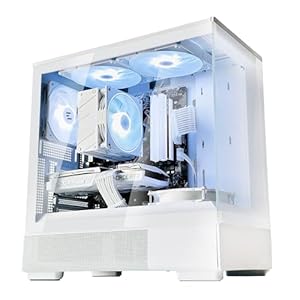
Zalman P10 Micro ATX Case, MATX PC Case with 120mm ARGB Fan Pre-Put in, Panoramic View Tempered Glass Entrance & Aspect Panel, USB Sort C and USB 3.0, White


Wireless Keyboard and Mouse, Ergonomic Keyboard Mouse – RGB Backlit, Rechargeable, Quiet, with Phone Holder, Wrist Rest, Lighted Mac Keyboard and Mouse Combo, for Mac, Windows, Laptop, PC

Nimo 15.6 FHD Pupil Laptop computer, 16GB RAM, 1TB SSD, Intel Pentium Quad-Core N100 (Beat to i3-1115G4, As much as 3.4GHz), Backlit Keyboard, Fingerprint, 2 Years Guarantee, 90 Days Return, WiFi 6, Win 11
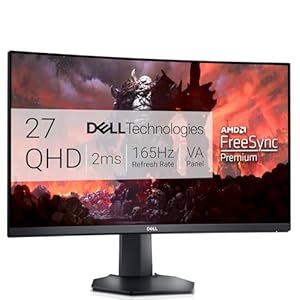
Dell S2722DGM Curved Gaming Monitor – 27-inch QHD (2560 x 1440) 1500R Curved Display, 165Hz Refresh Rate (DisplayPort), HDMI/DisplayPort Connectivity, Height/Tilt Adjustability – Black
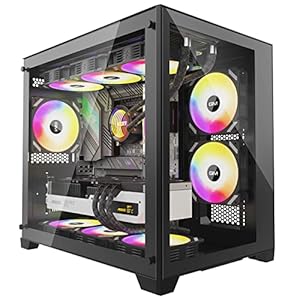
GIM Micro ATX PC Case with 2 Tempered Glass Panels Mini Tower Gaming PC Case Micro ATX Case with 2 Magnet Mud Filters, Gaming Pc Case with USB3.0 I/O Port, Black with out Followers