After about a decade in the making, new voice assistants from Amazon and Google are finally here, and while a lot has changed in the time since they were first released, the new boss, so to speak, feels the same as the old boss—a little hard of hearing.
This week, Amazon rolled out Alexa+, the company’s chatbot-powered sequel for regular, old Alexa. That means everyone with compatible Echo speakers can switch over to Amazon’s new voice assistant, which is now infused with a large language model (LLM) similar to the one used by OpenAI’s ChatGPT. It was a long road of early access lasting about a year, which you’d think would help improve the final results, but so far, reactions have been… underwhelming.
Comments on Reddit are riddled with complaints of slow response times, subpar accuracy, and disappointment with the general user experience. In other words, the same complaints that plagued voice assistants before the great merging of generative AI. While I haven’t had a chance to test Alexa+ at length myself, tech reviewers like our peers at The Verge have given it a whirl, and… yeah, not so great.
As deflating as that is, Alexa+ and its anticlimax isn’t the exception—it seems to be the rule. Google also recently rolled out its new AI-infused voice assistant fully, and the results have also lacked fireworks. I’ve been using Gemini for Home (Google’s next-gen voice assistant) for a couple of months now and can corroborate the collective lack of enthusiasm.
While Gemini for Home may have a more natural-sounding voice and way of speaking, the performance is about the same and sometimes worse than before. One significant bit of friction is that Gemini for Home takes quite a bit longer to process commands than the previous version. That would almost be fine if it were more accurate and better at actually doing what you want, but in my experience, that’s not always the case. Like Alexa+, Gemini for Home gets confused at times, overthinks, or just downright misunderstands what you want—all core problems of previous versions of voice assistants.
There are some perks, like being able to tell Gemini for Home to do multiple things in one command, but I’d be lying if I said those perks have materially changed the smart home/voice assistant experience in the way that Google had forecasted.
What I’m trying to say is that right now, next-gen voice assistants feel like a bit of a whiff. I say “right now” because there’s always room for improvement—maybe a technological breakthrough will usher in a brand new way of marrying voice assistants and LLMs, finally making them feel like a pivotal upgrade. Who knows? If I said I’m optimistic about that prospect, I’d be lying, though. One thing that undercuts my confidence is the only major voice assistant I haven’t mentioned so far: Siri.
If there’s one thing that’s clear about AI Siri, it’s that making it do all the stuff Apple wants it to do has been more difficult than the company expected. While a new Siri was announced in 2024, Apple has yet to roll out the full capabilities of its voice assistant, delaying its launch due to concerns over its performance and readiness to function on a mass scale. Apple could finally join the ranks of Alexa+ and Gemini soon—potentially this spring—but for now, it stands as a reminder that this whole voice assistant thing is a lot harder than it looks. Even if it does arrive soon, it’s worth noting that Gemini will help power the new voice assistant thanks to a deal struck by Google and Apple in January.
And until someone cracks the code, we’re left with LLM-powered voice assistants that look an awful lot like the non-LLM-powered voice assistants, and something tells me that isn’t what Google, Amazon, and Apple are going for. Better drink some hot tea with honey, folks, because you may be shouting endlessly at your smart speakers for the foreseeable future.
Trending Products
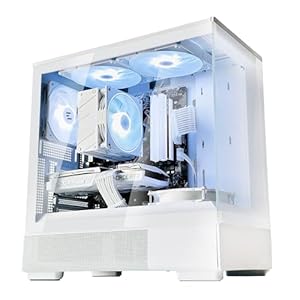
Zalman P10 Micro ATX Case, MATX PC Case with 120mm ARGB Fan Pre-Put in, Panoramic View Tempered Glass Entrance & Aspect Panel, USB Sort C and USB 3.0, White


Wireless Keyboard and Mouse, Ergonomic Keyboard Mouse – RGB Backlit, Rechargeable, Quiet, with Phone Holder, Wrist Rest, Lighted Mac Keyboard and Mouse Combo, for Mac, Windows, Laptop, PC

Nimo 15.6 FHD Pupil Laptop computer, 16GB RAM, 1TB SSD, Intel Pentium Quad-Core N100 (Beat to i3-1115G4, As much as 3.4GHz), Backlit Keyboard, Fingerprint, 2 Years Guarantee, 90 Days Return, WiFi 6, Win 11
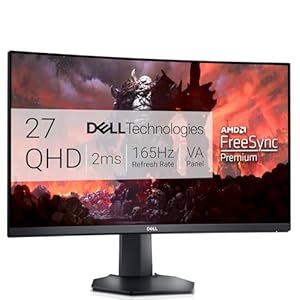
Dell S2722DGM Curved Gaming Monitor – 27-inch QHD (2560 x 1440) 1500R Curved Display, 165Hz Refresh Rate (DisplayPort), HDMI/DisplayPort Connectivity, Height/Tilt Adjustability – Black
GIM Micro ATX PC Case with 2 Tempered Glass Panels Mini Tower Gaming PC Case Micro ATX Case with 2 Magnet Mud Filters, Gaming Pc Case with USB3.0 I/O Port, Black with out Followers