Before anyone gets up in arms, I’m aware that there’s a certain irony in wanting more features out of an e-reader. The point of one is to provide the conveniences of digital reading without major distractions, and without worrying so much about battery life. It’s hard to add a lot without turning a Kindle into an iPad, not only defeating the point, but raising its price.
It’s hard to deny, though, that Kindles aren’t exactly the most exciting and innovative devices these days. There’s no immediate crisis in sales or anything — but I could see them falling out of favor in a few years if Amazon doesn’t work on bringing more to the table. It should at least be taking a glance at what some of its rivals in the e-reader space are doing, like any tech giant.
Are Kindles really lagging behind the times?
Yes, no, maybe, perhaps
Kindles are, as I said, intentionally simple devices in many ways. E-ink may not be the fastest or sharpest display tech, but for reading text, it’s fantastic — it’s easy on the eyes, and sips power, since it doesn’t draw any juice until the image changes. Some models can play audiobooks, and Kindle Scribes have a number of sketching and notetaking features — but it’s expected that most of the time, you’re going to be reading books you’ve downloaded from the Kindle Store, or perhaps other documents you’ve synced via Send to Kindle.
Where Kindles start to falter is in comparison with what other e-readers are doing. I’m mostly thinking of my Boox Note Air4 C, which has a major advantage over any Kindle: Android. Even if the tablet isn’t powerful enough to run Netflix or any games, this does a lot more than support sketching and notetaking functions. It allows you to access any bookstore with a presence on Android, freeing you from the worry of leaving favorite books behind because you switched devices. Almost as important is the ability to run apps that involve a lot of browsing, but have traditionally been excluded from e-readers, such as Reddit. Social media actually becomes less addictive and more rewarding when you have to read a little slower, and jamming out a post involves typing on an e-ink keyboard. You’ll find yourself in fewer online brawls.
It might be time to acknowledge that as romantic as the idea of a single- or dual-purpose device is, that can be increasingly hard to justify, especially for the prices Amazon charges.
I suppose it’s how “disconnected” Kindles feel that gets to me. Amazon is so concerned about keeping you in its ecosystem that it’s limiting its own devices’ potential. Even the Kindle Scribe limits you to importing documents from Google Drive and Microsoft OneDrive, and exporting notebooks to OneDrive alone — that’s nothing like the flexibility of Boox devices, let alone a conventional Android tablet or an iPad. People would be up in arms if there was only one sanctioned service for exporting notes from an Android tablet.
It might be time to acknowledge that as romantic as the idea of a single- or dual-purpose device is, that can be increasingly hard to justify, especially for the prices Amazon charges. Yes, the cheapest Kindle is $110 — but if you want color, you’re looking at a minimum of $250, and Kindle Scribes range from $400 to $680, depending on storage and whether it’s a Colorsoft model. At those pricetags, just about anyone is going to question how much they value less weight and eye strain over getting a conventional tablet with a lot more power and storage.
Weight shouldn’t be ignored. It used to be that the gap between e-readers and other devices was huge — my third-generation 3G iPad was 1.46 pounds, making it distinctly uncomfortable for long reading sessions unless I could use my lap or a stand. Today, a 5G iPad mini is no more than 0.66 pounds, and even an 11-inch iPad Pro is under the one-pound mark. Smartphones, meanwhile, have become big enough for reading, while simultaneously becoming incredibly light. Switching measurement systems for a moment, the iPhone Air is just 165 grams — a whopping 7 grams more than the lightest Kindle. Once ultra-thin and foldable phones become the norm, it’s hard to see how many people will justify spending extra on an e-reader beyond battery life.
What can Amazon do to keep Kindles relevant?
One impossible ask, a few reasonable ones

Realistically, I doubt that Amazon is going to adopt Android anytime soon. That would require a major overhaul, and while the company’s book and subscription sales wouldn’t collapse with an open platform, they would take a hit. About the only way I could see Amazon opening up Kindles to competing stores is if it’s faced with antitrust regulations. That’s not impossible — there are, for instance, signs that Apple is finally preparing to improve the iPhone’s compatibility with third-party smartwatches, knowing there’s been scrutiny over the privileges it affords the Apple Watch.
Short of that, Amazon could expand the number of default apps on Kindles, and expand their functionality. Aside from tools for reading, shopping, audiobooks, and notebooks, the only other app on Kindles is a barebones web browser. Simply fleshing out that browser and backing it up with slightly better memory and processor specs would go a long way — I know I’d love to read more news and magazine articles on a Kindle if I could count on a smooth experience with proper formatting.
Sooner or later, Amazon is going to have to re-evaluate its assumptions about what a Kindle should be.
It might also help to integrate more sharing and social media options, or even multitasking. One of the beautiful things about reading on an iPad or Android tablet is that for people with short attention spans like me, it’s possible to split-screen a second app while reading. Imagine being able to check Reddit or Bluesky in between reading some Kafka. Heck, for work or school purposes, it would be excellent to be able to take meeting/lecture notes while having reference material open. Or alternately, goof off when the manager starts on a 15-minute spiel about something you understand better than they do.
In terms of hardware, it’s hard to imagine much more than spec bumps without violating the spirit of an e-reader, but Amazon of all companies should be pushing the boundaries of e-ink and styluses. It’s been slow to enter the color market, and the industry is desperately in need of an e-ink display with colors that impress instead of being washed out. As for styluses, a pen with the tap, squeeze, pressure, and rotation capabilities of the Apple Pencil Pro would attract a lot more artists, especially if they could export to apps like Photoshop.
Undoubtedly, Amazon has some sort of roadmap for improving Kindles — there’s already limited Alexa+ support. Sooner or later, though, I think it’s going to have to re-evaluate its assumptions about what a Kindle should be if it doesn’t want everyone deciding that they’re done after spending $400 on an iPad or $1,000 on a flagship phone.
Trending Products
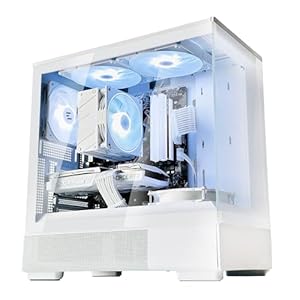
Zalman P10 Micro ATX Case, MATX PC Case with 120mm ARGB Fan Pre-Put in, Panoramic View Tempered Glass Entrance & Aspect Panel, USB Sort C and USB 3.0, White


Wireless Keyboard and Mouse, Ergonomic Keyboard Mouse – RGB Backlit, Rechargeable, Quiet, with Phone Holder, Wrist Rest, Lighted Mac Keyboard and Mouse Combo, for Mac, Windows, Laptop, PC
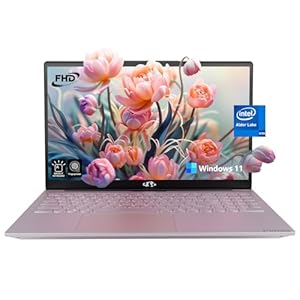
Nimo 15.6 FHD Pupil Laptop computer, 16GB RAM, 1TB SSD, Intel Pentium Quad-Core N100 (Beat to i3-1115G4, As much as 3.4GHz), Backlit Keyboard, Fingerprint, 2 Years Guarantee, 90 Days Return, WiFi 6, Win 11
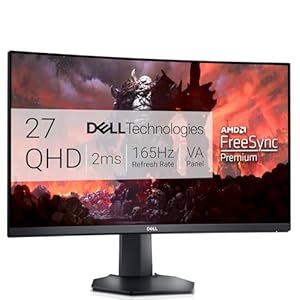
Dell S2722DGM Curved Gaming Monitor – 27-inch QHD (2560 x 1440) 1500R Curved Display, 165Hz Refresh Rate (DisplayPort), HDMI/DisplayPort Connectivity, Height/Tilt Adjustability – Black
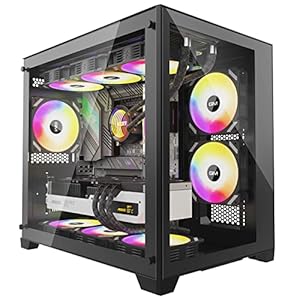
GIM Micro ATX PC Case with 2 Tempered Glass Panels Mini Tower Gaming PC Case Micro ATX Case with 2 Magnet Mud Filters, Gaming Pc Case with USB3.0 I/O Port, Black with out Followers